Hardware Id Trivium Keygen Mac
Mac OS X development is a fairly new animal for me, and I'm in the process of porting over some software. For software licensing and registration I need to be able to generate some kind of hardware ID. It doesn't have to be anything fancy; Ethernet MAC address, hard drive serial, CPU serial, something like that.
I've got it covered on Windows, but I haven't a clue on Mac. Any idea of what I need to do, or where I can go for information on this would be great!
Edit:
Dec 07, 2012 How to find hardware id use for James Cameron'avatar the game keygen. How to find hardware id use for James Cameron'avatar the game keygen. Skip navigation. With Fire and Sword Gold Edition. Mount & Blade: With Fire and Sword Gold. Copy your Hardware ID in the keygen 5. Instruction in Pictures: 4Dummies.png (TRiViUM folder on DVD) 1. Copy your Hardware ID in the keygen. Download Lock On: Flaming Cliffs 2. Copy that and paste it on the Hardware ID (on the keygen). Use our keygen to activate program in.
For anybody else that is interested in this, this is the code I ended up using with Qt's QProcess class:
Note: I'm using C++.
Peter Mortensen8 Answers
Try this Terminal command:
From here
CSC Orion Installation Here are simple steps on how to install csc orion 18. • Step 1: Download CSC ORION 18 from • Step 2: Unrar (unzip) and install the application, by running the setup file. Csc orion 18 keygen free. • Step 3: After installation of csc orion 18 • Step 4: Open the downloaded folder---open 'licence'----then copy 'Local.csclicdb' • Step 5: Now go to your computer and open this file location C: ProgramData CSC Licensing • Step 6: Finally paste the copied file i.e 'Local.csclicdb' in it Thats all!!!!
Here is that command wrapped in Cocoa (which could probably be made a bit cleaner):
Why not try gethostuuid()? Here's the documentation from the Mac OS X System Calls Manual:
NAME:
SYNOPSIS:
DESCRIPTION:
The gethostuuid() function returns a 16-byte uuid_t specified by id, that uniquely identifies the current machine. Be aware that the hardware identifiers that gethostuuid() uses to generate the UUID can themselves be modified.
The wait argument is a pointer to a struct timespec that specifies the maximum time to wait for the result. Setting the tv_sec and tv_nsec fields to zero means to wait indefinitely until it completes.
RETURN VALUES:
The gethostuuid() function returns zero on success or -1 on error.
ERRORS
The gethostuuid() functions fails if:
computerfreaker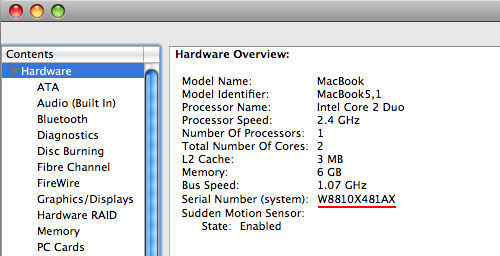
This would be easier to answer if you told us what language you were using. The information is obtainable without any shell commands through the SystemConfiguration framework, and also through IOKit if you want to get your hands really dirty.
Azeem.ButtAzeem.ButtRunning:
in a terminal returns what it likely a unique id. That works on my 10.5 box, I'm not sure what the correct string will be in other versions of OS X.
As some people above have hinted, you can use a Terminal command to get a hardware ID.
I assume you want to do this in code however so I would take a look at the NSTask class in Cocoa. It basically lets you run terminal commands inside your application.
This code is an example of how to use NSTask in Cocoa. It sets up the environment to execute the 'killall' command. It passes it the arguement 'Finder'.
It's the equivilent of running 'killall Finder' on the command line, which will kill the Finder obviously.
Brock WoolfHardware Id Trivium Keygen Mac Download
Brock WoolfSystem Profiler (in Applications - Utilities) contains most of this kind of info. It has your serial number and your mac address (no relation to Mac. All computers have a mac address which is pretty much unique to every network card).
SingletonedSingletoned