How To Make Crack With Sodium Bicarbonate
It was hypotesized that that reaction was an irreversible one, but Oeda, Valentina and Arianna, knowing the process of making of sodium bicarbonate, wanated to try this experiment, by the 16th of. Crack maker, Baby Doh, shows how he turns regular cocaine into crack. How to Make Crack. Crack Smoking Veteran Drugs Inc. Season 3 Preview. Episode Clip Deep Woods Shake and Bake Episode Clip Close, But No Cigar Episode Clip Yaba Daba Do.
Please Note: I do not condone smoking crack or abusing cocaine and its subsidiaries. This substance can and will ruin lives. This is simply an informational tutorial about the process involved in the creation of crack.
I couldn’t find a guide on this anywhere here, sorry if I wasn’t looking hard enough. I also am not sure if I am going to be violating any rules with this but I don’t see why so here you go.
This is my guide to making CRACK COCAINE from POWDER COCAINE using Sodium Bicarbonate (baking soda).
How To Make Crack Ammonia
Let’s jump right into it, you’re going to need several key materials and ingredients: 1x Kitchen stove or portable burner 1x Medium size mason jar, glass jar, or pot (must have easy access from the top and be able to withstand boiling water) 1x Gallon (or other quantities depending on sheer amount of cocaine) DISTILLED WATER1x Box of baking soda (plan for a 3:1 sodium bicarbonate to powder cocaine ratio)
Optional items: 1x Face mask 1x Protective gloves 1x Rack to hold jar above flame (not 100% necessary, but makes things easier when using a portable burner 1x Small bowl or cup
Step 1: Preparing Initial Mixture: First off you are going to take your cocaine and your sodium bicarbonate and thoroughly mix them together in a small bowl or cup if you have it, if not this can be done in your main jar. 3 PARTS BAKING SODA for every 1 PART COCAINE. Once you have these evenly distributed you want to take your distilled water and mix in enough to get the entire mixture to a muddy thick consistency. You want it to be thin enough to be able to swirl it around the bottom of the jar, but not thick enough that it clumps up and is hard to move.
Step 2: Initial Boil: You are not going to turn on your burner or stove to a medium/high heat. This is where it comes in handy to have protective gloves and a mask, as things get hot and chemical changes are taking place. Holding your jar above the flame or stove, you want to swirl the mixture around in the bottom as you heat it. It doesn’t have to be a fast movement, but enough to keep all the mixture from staying in one place. You are going to keep this up for a while, and eventually the cocaine and sodium bicarbonate will begin to react with each other, and the excess water, etc. will begin to evaporate from this mixture. After this has occurred you will remove the jar from the heat source and let it cool. A hard substance should have formed at the bottom of your jar.
Step 3: Secondary Heating: You want to take your jar with the hard residue at the bottom and fill it with distilled water, about and inch and a half above where your residue has settled. We are going to take this back to the stove/burner, and begin the swirling again. This time you will see the hard substance at the bottom begin to come off, and with consistent swirling you should be able to keep it all in the middle of the water, and a nice clumpy rock will begin to form. This is harder than it sounds but with a little work you can make it happen easily. Once you see a solid piece formed in the middle you want to remove it from the heat source but do not cease your swirling motion. For a couple minutes continue swirling as the mixture cools. Dump out the excess water, through a coffee filter if you really want, and you should be left with a nice crack rock.
This method is the easiest and most simple to perform. It requires some patience to perfect, but almost anyone can do it.
Hope you all enjoy!
-cyllaaa

| Names | |
|---|---|
| IUPAC name Sodium hydrogen carbonate | |
| Other names Baking soda, bicarb (laboratory slang), bicarbonate of soda, nahcolite | |
| Identifiers | |
| |
| 4153970 | |
| ChEBI |
|
| ChEMBL | |
| ChemSpider |
|
| DrugBank | |
| ECHA InfoCard | 100.005.122 |
| EC Number | 205-633-8 |
| E number | E500(ii) (acidity regulators, ...) |
| KEGG |
|
| MeSH | Sodium+bicarbonate |
| RTECS number | VZ0950000 |
| UNII | |
CompTox Dashboard(EPA) | |
| |
| |
| Properties | |
| NaHCO 3 | |
| Molar mass | 84.0066 g mol−1 |
| Appearance | White crystals |
| Odor | Odorless |
| Density |
|
| Melting point | (Decomposes to sodium carbonate starting at 50 °C[1][6]) |
| |
| Solubility | 0.02 wt% acetone, 2.13 wt% methanol @22 °C.[4] insoluble in ethanol |
| log P | −0.82 |
| Acidity (pKa) | |
Refractive index (nD) | nα = 1.377 nβ = 1.501 nγ = 1.583 |
| Structure | |
| Monoclinic | |
| Thermochemistry | |
Heat capacity(C) | 87.6 J/mol K[7] |
| 101.7 J/mol K[7] | |
Std enthalpy of formation(ΔfH⦵298) | −950.8 kJ/mol[7] |
| −851.0 kJ/mol[7] | |
| Pharmacology | |
| B05CB04 (WHO) B05XA02 (WHO), QG04BQ01 (WHO) | |
| Intravenous, oral | |
| Hazards | |
| Main hazards | Causes serious eye irritation |
| Safety data sheet | External MSDS |
| NFPA 704 | |
| Flash point | Incombustible |
| Lethal dose or concentration (LD, LC): | |
| 4220 mg/kg (rat, oral)[8] | |
| Related compounds | |
Other anions | Sodium carbonate |
Except where otherwise noted, data are given for materials in their standard state (at 25 °C [77 °F], 100 kPa). | |
| verify (what is ?) | |
| Infobox references | |
Sodium bicarbonate (IUPAC name: sodium hydrogen carbonate), commonly known as baking soda, is a chemical compound with the formula NaHCO3. It is a salt composed of a sodium cation (Na+) and a bicarbonate anion (HCO3−). Sodium bicarbonate is a white solid that is crystalline, but often appears as a fine powder. It has a slightly salty, alkaline taste resembling that of washing soda (sodium carbonate). The natural mineral form is nahcolite. It is a component of the mineral natron and is found dissolved in many mineral springs.
- 2Uses
- 2.1Cooking
- 2.1.1Leavening
- 2.8Medical uses and health
- 2.1Cooking
- 3Chemistry
- 5Production
- 6In popular culture
Nomenclature[edit]
Because it has long been known and is widely used, the salt has many related names such as baking soda, bread soda, cooking soda, and bicarbonate of soda. The term baking soda is more common in the United States, whereas bicarbonate of soda is more common in Australia and Britain.[9] In colloquial usage, the names sodium bicarbonate and bicarbonate of soda are often truncated; forms such as sodium bicarb, bicarb soda, bicarbonate, and bicarb are common.
The word saleratus, from Latinsal æratus meaning 'aerated salt', was widely used in the 19th century for both sodium bicarbonate and potassium bicarbonate.
It is known as one of the E number food additives E500.
The prefix bi in bicarbonate comes from an outdated naming system and is based on the observation that there is twice as much carbonate (CO3) per sodium in sodium bicarbonate (NaHCO3) as there is in sodium carbonate (Na2CO3). The modern chemical formulas of these compounds express their precise chemical compositions (which were unknown when the names sodium carbonate and sodium bicarbonate were coined) and show the same ratio the other way around: there is half as much sodium per carbonate in NaHCO3 as in Na2CO3 (disodium carbonate).
Uses[edit]
Cooking[edit]
Leavening[edit]
In cooking, baking soda is primarily used in baking as a leavening agent. When it reacts with acid, carbon dioxide is released, which causes expansion of the batter and forms the characteristic texture and grain in pancakes, cakes, quick breads, soda bread, and other baked and fried foods. Acidic compounds that induce this reaction include phosphates, cream of tartar, lemon juice, yogurt, buttermilk, cocoa, and vinegar. Baking soda may be used together with sourdough, which is acidic, making a lighter product with a less acidic taste.[10]
Heat can also by itself cause sodium bicarbonate to act as a raising agent in baking because of thermal decomposition, releasing carbon dioxide. When used this way on its own, without the presence of an acidic component (whether in the batter or by the use of a baking powder containing acid), only half the available CO2 is released. Additionally, in the absence of acid, thermal decomposition of sodium bicarbonate also produces sodium carbonate, which is strongly alkaline and gives the baked product a bitter, 'soapy' taste and a yellow color.
Carbon dioxide production from exposure to heat starts at temperatures above 80 °C (180 °F).[11]
- 2 NaHCO3 → Na2CO3 + H2O + CO2
Since the reaction occurs slowly at room temperature, mixtures (cake batter, etc.) can be allowed to stand without rising until they are heated in the oven.
When adding acid, non-acid ingredients such as whole milk or Dutch-processedcocoa are often added to baked foods to avoid an over-acidic taste from the added acid.[12]
Baking powder[edit]
Baking powder, also sold for cooking, contains around 30% of bicarbonate, and various acidic ingredients which are activated by the addition of water, without the need for additional acids in the cooking medium.[13][14][15]Many forms of baking powder contain sodium bicarbonate combined with calcium acid phosphate, sodium aluminium phosphate, or cream of tartar.[16] Baking soda is alkaline; the acid used in baking powder avoids a metallic taste when the chemical change during baking creates sodium carbonate.
Other[edit]
Sodium bicarbonate was sometimes used in cooking green vegetables, as it gives them a bright green colour—which has been described as artificial-looking—due to its reacting with chlorophyll to produce chlorophyllin.[17] However, this tends to affect taste, texture and nutritional content, and is no longer common.[18]
Baking soda is still used to soften pulses (peas, beans) before and during cooking, as in the traditional British mushy peas recipe for soaking the peas. The main effect of sodium bicarbonate is to modify the pH of the soaking solution and cooking water, that in turn softens the hard external shell, reduces cooking times and may alter the percentage of nutrients in the dish, its flavour and consistence.[19]
Baking soda may react with acids in food, including vitamin C (L-ascorbic acid).
It is used in Asian and Latin American cuisine to tenderize meats. It is also used in breading, such as for fried foods, to enhance crispness and allow passages for steam to escape, so the breading is not blown off during cooking.
Pest control[edit]
Sodium bicarbonate can be an effective way of controlling fungal growth,[20] and in the United States is registered by the Environmental Protection Agency as a biopesticide.[21]
Alkalinity/pH increase[edit]
Sodium bicarbonate can be administered to pools, spas, and garden ponds to raise the total alkalinity. This will also raise the pH level and make maintaining proper pH easier. In the event that the pH is high, sodium bicarbonate should not be used to adjust the pH.[22]
Pyrotechnics[edit]
Sodium bicarbonate is one of the main components of the common 'black snake' firework. The effect is caused by the thermal decomposition, which produces carbon dioxide gas to produce a long snake-like ash as a combustion product of the other main component, sucrose.
Mild disinfectant[edit]
It has weak disinfectant properties,[23][24] and it may be an effective fungicide against some organisms.[25] Because baking soda will absorb musty smells, it has become a reliable method for used book sellers when making books less malodorous.[26]
Fire extinguisher[edit]
Sodium bicarbonate can be used to extinguish small grease or electrical fires by being thrown over the fire, as heating of sodium bicarbonate releases carbon dioxide.[27] However, it should not be applied to fires in deep fryers; the sudden release of gas may cause the grease to splatter.[27] Sodium bicarbonate is used in BC dry chemicalfire extinguishers as an alternative to the more corrosive diammonium phosphate in ABC extinguishers. The alkaline nature of sodium bicarbonate makes it the only dry chemical agent, besides Purple-K, that was used in large-scale fire suppression systems installed in commercial kitchens. Because it can act as an alkali, the agent has a mild saponification effect on hot grease, which forms a smothering, soapy foam.
Neutralization of acids[edit]
Sodium bicarbonate reacts spontaneously with acids, releasing CO2 gas as a reaction product. It is commonly used to neutralize unwanted acid solutions or acid spills in chemical laboratories.[28] It is not appropriate to use sodium bicarbonate to neutralize base[29] even though it is amphoteric, reacting with both acids and bases.
Medical uses and health[edit]
Sodium bicarbonate mixed with water can be used as an antacid to treat acid indigestion and heartburn.[30] Its reaction with stomach acid produces salt, water, and carbon dioxide:
- NaHCO3 + HCl → NaCl + H2O + CO2(g)
A mixture of sodium bicarbonate and polyethylene glycol such as PegLyte,[31] dissolved in water and taken orally, is an effective gastrointestinal lavage preparation and laxative prior to gastrointestinal surgery, gastroscopy, etc.
Intravenous sodium bicarbonate in an aqueous solution is sometimes used for cases of acidosis, or when insufficient sodium or bicarbonate ions are in the blood.[32] In cases of respiratory acidosis, the infused bicarbonate ion drives the carbonic acid/bicarbonate buffer of plasma to the left, and thus raises the pH. For this reason, sodium bicarbonate is used in medically supervised cardiopulmonary resuscitation. Infusion of bicarbonate is indicated only when the blood pH is markedly low (< 7.1–7.0).[33]
HCO3− is used for treatment of hyperkalemia, as it will drive K+ back into cells during periods of acidosis.[34] Since sodium bicarbonate can cause alkalosis, it is sometimes used to treat aspirin overdoses. Aspirin requires an acidic environment for proper absorption, and the basic environment diminishes aspirin absorption in the case of an overdose.[35] Sodium bicarbonate has also been used in the treatment of tricyclic antidepressant overdose.[36] It can also be applied topically as a paste, with three parts baking soda to one part water, to relieve some kinds of insect bites and stings (as well as accompanying swelling).[37]
Some alternative practitioners, such as Tullio Simoncini, have promoted baking soda as a cancer cure, which the American Cancer Society has warned against due to both its unproven effectiveness and potential danger in use.[38]Edzard Ernst has called the promotion of sodium bicarbonate as a cancer cure 'one of the more sickening alternative cancer scams I have seen for a long time'.[39]
Sodium bicarbonate can be added to local anesthetics, to speed up the onset of their effects and make their injection less painful.[40] It is also a component of Moffett's solution, used in nasalsurgery.
As early as the 1920s, bicarbonate was found to cause increased bone strength in patients who were losing calcium in their urine. In 1968, diets producing too much acid were thought to put bones at risk.[41] Experiments by Anthony Sebastian of the University of California, San Francisco starting in the late 20th century found that the body was breaking down bones and muscles to release carbonates, phosphates, and ammonia, which neutralize acid. Adding bicarbonate to the diet (he chose to use the sodium-free saleratus, potassium bicarbonate) reduced loss of calcium in postmenopausal women, amounting to the equivalent of 'an arm-and-a-leg's worth' of bone if this continued for two decades.
Antacid (such as baking soda) solutions have been prepared and used by protesters to alleviate the effects of exposure to tear gas during protests.[42][failed verification][43]
Similarly to its use in baking, sodium bicarbonate is used together with a mild acid such as tartaric acid as the excipient in effervescent tablets: when such a tablet is dropped in a glass of water, the carbonate leaves the reaction medium as carbon dioxide gas ( HCO3− + H+ → H2O + CO2↑ or, more precisely, HCO3− + H3O+ → 2 H2O + CO2↑ ) leaving the medication dissolved in the water together with the resulting salt (in this example, sodium tartrate).
Personal hygiene[edit]
Toothpaste containing sodium bicarbonate has in several studies been shown to have a better whitening[44][44][45][46] and plaque removal effect[47][48]than toothpastes without it.
Sodium bicarbonate is also used as an ingredient in some mouthwashes. It has anticaries and abrasive properties.[49] It works as a mechanical cleanser on the teeth and gums, neutralizes the production of acid in the mouth, and also acts as an antiseptic to help prevent infections.[50][51] Sodium bicarbonate in combination with other ingredients can be used to make a dry or wet deodorant.[52][53] Sodium bicarbonate may be used as a buffering agent, combined with table salt, when creating a solution for nasal irrigation.[54]
It is used in eye hygiene to treat blepharitis. This is done by addition of a teaspoon of sodium bicarbonate to cool water that was recently boiled, followed by gentle scrubbing of the eyelash base with a cotton swab dipped in the solution.[55]
Veterinary uses[edit]
Sodium bicarbonate is used as a cattle feed supplement, in particular as a buffering agent for the rumen.[56]
In sports[edit]
Small amounts of sodium bicarbonate have been shown to be useful as a supplement for athletes in speed-based events, such as middle-distance running, lasting about 1–7 minutes.[57][58] However, overdose is a serious risk because sodium bicarbonate is slightly toxic;[59] and gastrointestinal irritation is of particular concern.[58] Additionally, this practice causes an increase in dietary sodium.[60]
Cleaning agent[edit]
Sodium bicarbonate is used in a process for removing paint and corrosion called sodablasting; the process is particularly suitable for cleaning aluminium panels which can be distorted by other types of abrasives.
A manufacturer recommends a paste made from baking soda with minimal water as a gentle scouring powder,[27] and is useful in removing surface rust, as the rust forms a water-soluble compound when in a concentrated alkaline solution;[61] cold water should be used, as hot-water solutions can corrode steel.[62] Sodium bicarbonate attacks the thin protective oxide layer that forms on aluminium, making it unsuitable for cleaning this metal.[63] A solution in warm water will remove the tarnish from silver when the silver is in contact with a piece of aluminium foil.[63][64]Baking soda is commonly added to washing machines as a replacement for water softener and to remove odors from clothes. It is also effective in removing heavy tea and coffee stains from cups when diluted with warm water. Also, baking soda can be used as a multipurpose odor remover.[65]
During the Manhattan Project to develop the nuclear bomb in the early 1940s, the chemical toxicity of uranium was an issue. Uranium oxides were found to stick very well to cotton cloth, and did not wash out with soap or laundry detergent. However, the uranium would wash out with a 2% solution of sodium bicarbonate. Clothing can become contaminated with toxic dust of depleted uranium (DU), which is very dense, hence used for counterweights in a civilian context, and in armour-piercing projectiles. DU is not removed by normal laundering; washing with about 6 ounces (170 g) of baking soda in 2 gallons (7.5 l) of water will help to wash it out.[66]
Chemistry[edit]
Sodium bicarbonate is an amphoteric compound. Aqueous solutions are very mildly alkaline due to the formation of carbonic acid and hydroxide ion:
- HCO−
3 + H2O → H
2CO
3 + OH−
Sodium bicarbonate can be used as a wash to remove any acidic impurities from a 'crude' liquid, producing a purer sample. Reaction of sodium bicarbonate and an acid produces a salt and carbonic acid, which readily decomposes to carbon dioxide and water:
- NaHCO3 + HCl → NaCl + H2CO3
- H2CO3 → H2O + CO2(g)
Sodium bicarbonate reacts with acetic acid (found in vinegar), producing sodium acetate, water, and carbon dioxide:
- NaHCO3 + CH3COOH → CH3COONa + H2O + CO2(g)
Sodium bicarbonate reacts with bases such as sodium hydroxide to form carbonates:
- NaHCO3 + NaOH → Na2CO3 + H2O
Sodium bicarbonate reacts with carboxyl groups in proteins to give a brisk effervescence from the formation of CO
2. This reaction is used to test for the presence of carboxylic groups in protein.[citation needed]
Thermal decomposition[edit]
Above 50 °C (122 °F), sodium bicarbonate gradually decomposes into sodium carbonate, water, and carbon dioxide. The conversion is fast at 200 °C (392 °F):[67]
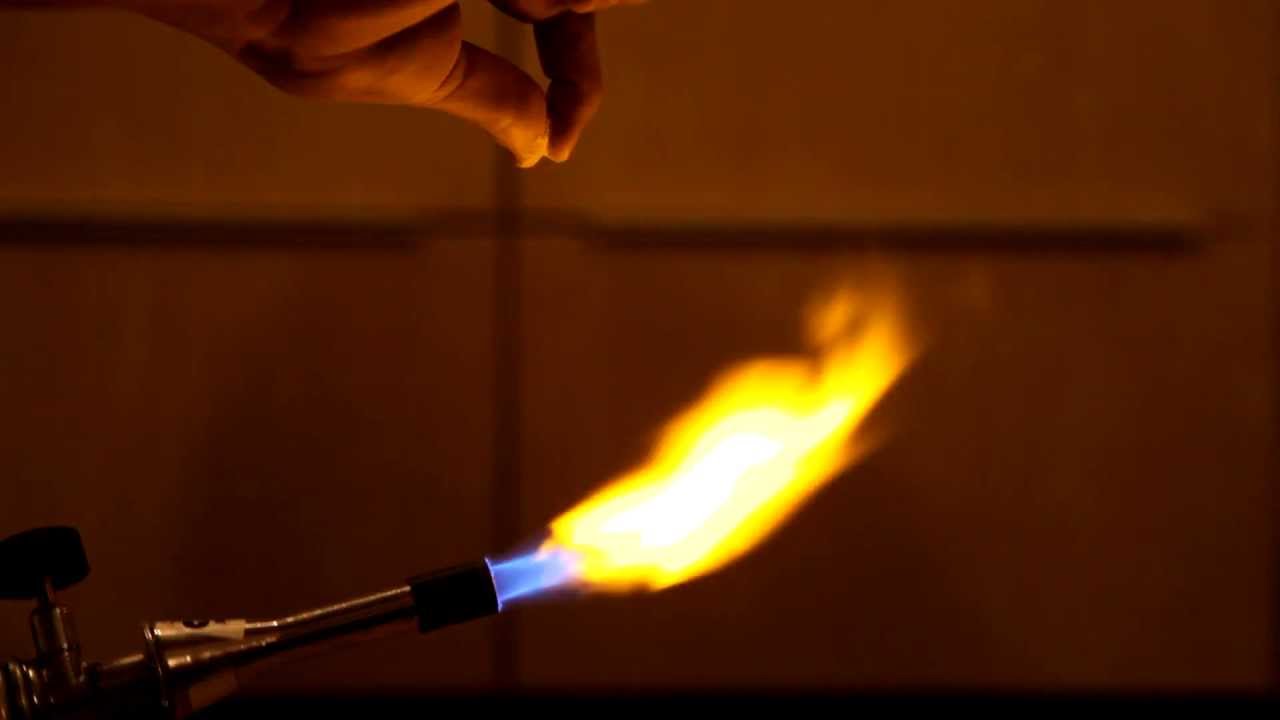
- 2 NaHCO3 → Na2CO3 + H2O + CO2
Most bicarbonates undergo this dehydration reaction. Further heating converts the carbonate into the oxide (above 850 °C/1,560 °F):[67]
- Na2CO3 → Na2O + CO2
These conversions are relevant to the use of NaHCO3 as a fire-suppression agent ('BC powder') in some dry-powder fire extinguishers.
History[edit]
In 1791, French chemist Nicolas Leblanc produced sodium carbonate, also known as soda ash. In 1846, two New York bakers, John Dwight and Austin Church, established the first factory in the United States to produce baking soda from sodium carbonate and carbon dioxide.[68]
Saleratus, potassium or sodium bicarbonate, is mentioned in the novel Captains Courageous by Rudyard Kipling as being used extensively in the 1800s in commercial fishing to prevent freshly caught fish from spoiling.[69]
Sodium Bicarbonate Powder
Production[edit]
Sodium bicarbonate is produced industrially from sodium carbonate:[70]
- Na2CO3 + CO2 + H2O → 2 NaHCO3
It is produced on the scale of about 100,000 tonnes/year (as of 2001).[71] Commercial quantities of baking soda are also produced by a similar method: soda ash, mined in the form of the ore trona, is dissolved in water and treated with carbon dioxide. Sodium bicarbonate precipitates as a solid from this solution.
Regarding the Solvay process, sodium bicarbonate is an intermediate in the reaction of sodium chloride, ammonia, and carbon dioxide. The product however shows low purity (75%).
Although of no practical value, NaHCO3 may be obtained by the reaction of carbon dioxide with an aqueous solution of sodium hydroxide:
- CO2 + NaOH → NaHCO3
Mining[edit]
Naturally occurring deposits of nahcolite (NaHCO3) are found in the Eocene-age (55.8–33.9 Mya) Green River Formation, Piceance Basin in Colorado. Nahcolite was deposited as beds during periods of high evaporation in the basin. It is commercially mined using common underground mining techniques such as bore, drum, and longwall mining in a fashion very similar to coal mining.
Limited amounts of product are further obtained by solution mining, pumping heated water through previously mined nahcolite beds and reconstituting the dissolved nahcolite above ground through a natural cooling crystallization process. Currently, only Genesis Alkali (formerly Tronox, formerly FMC) in the Green River Wyoming basin has successfully commercially solution mined the product.
In popular culture[edit]
Film[edit]
Sodium bicarbonate, as 'bicarbonate of soda', was a frequent source of punch lines for Groucho Marx in Marx brothers movies. In Duck Soup, Marx plays the leader of a nation at war. In one scene, he receives a message from the battlefield that his general is reporting a gas attack, and Groucho tells his aide: 'Tell him to take a teaspoonful of bicarbonate of soda and a half a glass of water.'[72] In A Night at the Opera, Groucho's character addresses the opening night crowd at an opera by saying of the lead tenor: 'Signor Lassparri comes from a very famous family. His mother was a well-known bass singer. His father was the first man to stuff spaghetti with bicarbonate of soda, thus causing and curing indigestion at the same time.'[73]
See also[edit]
References[edit]
- ^ abHaynes, p. 4.90
- ^ abcHaynes, p. 5.194
- ^ abc'Sodium Bicarbonate'(PDF). United Nations Environment Programme. Archived from the original(PDF) on 2011-05-16.Cite uses deprecated parameter
deadurl=(help) - ^Ellingboe, J. L.; Runnels, J. H. (1966). 'Solubilities of Sodium Carbonate and Sodium Bicarbonate in Acetone-Water and Methanol-Water Mixtures'. J. Chem. Eng. Data. 11 (3): 323–324. doi:10.1021/je60030a009.
- ^ abHaynes, p. 7.23
- ^Pasquali, Irene; Bettini, R.; Giordano, F. (2007). 'Thermal behaviour of diclofenac, diclofenac sodium and sodium bicarbonate compositions'. Journal of Thermal Analysis and Calorimetry. 90 (3): 903. doi:10.1007/s10973-006-8182-1.
- ^ abcdHaynes, p. 5.19
- ^Chambers, Michael. 'ChemIDplus – 144-55-8 – UIIMBOGNXHQVGW-UHFFFAOYSA-M – Sodium bicarbonate [USP:JAN] – Similar structures search, synonyms, formulas, resource links, and other chemical information'. chem.sis.nlm.nih.gov.
- ^https://www.thatslife.com.au/bicarbonate-of-soda-baking-soda-baking-powder-difference
- ^'Sourdough, Julie Cascio, University of Alaska Fairbanks Cooperative Extension Service, 2 May 2017, pub. FNH-00061'(PDF).
- ^'The Many Practical Uses of Baking Soda in the Kitchen'. About.com Food. Retrieved 2017-01-22.
In a nutshell, the uses for baking soda are many: It deodorizes, neutralizes, and cleans all without the toxic mess of most commercial products.
- ^'Baking 101: The Difference Between Baking Soda and Baking Powder'. Joy the Baker. Retrieved 4 August 2015.
- ^Czernohorsky, J. H. and Hooker, R. 'THE CHEMISTRY OF BAKING'(PDF). New Zealand Institute of Chemistry. Archived from the original(PDF) on 2016-11-27. Retrieved 2017-01-22.Cite uses deprecated parameter
dead-url=(help)CS1 maint: multiple names: authors list (link) - ^'Baking Soda and Baking Powder'. FineCooking.com. Retrieved 2017-01-22.
- ^'Baking Soda FAQs'. Arm & Hammer Multi-Brand. Church & Dwight Company. 'What is the difference baking soda and baking powder?'. Archived from the original on 27 June 2017. Retrieved 20 July 2017.Cite uses deprecated parameter
deadurl=(help) - ^'Glossary Ingredients'. Cooking.com.
- ^Srilakshmi, B. (2003). Food Science. New Age International. p. 188. ISBN978-81-224-1481-3.
- ^Sukhadwala, Sejal. 'Bicarbonate of soda recipes'. BBC Food. Retrieved 20 July 2017.
- ^'How does adding baking soda to soaking beans/lentils reduce the gas?'. Cooking Stack Exchange. Retrieved 25 June 2019.
- ^Potassium bicarbonate (073508) and Sodium bicarbonate (073505) Fact Sheet. United States Environmental Protection Agency. Updated 17 February 2011. Retrieved 25 November 2011.
- ^Registered Biofungicide 04/29/02United States Environmental Protection Agency. Updated 29 March 2002. Retrieved 25 November 2011.
- ^'A pool owners guide by Arm & Hammer Baking soda'(PDF). Armandhammer.com. Archived from the original(PDF) on 7 September 2012. Retrieved 30 July 2009.Cite uses deprecated parameter
dead-url=(help) - ^Malik, Y; Goyal, S (May 2006). 'Virucidal efficacy of sodium bicarbonate on a food contact surface against feline calicivirus, a norovirus surrogate'. International Journal of Food Microbiology. 109 (1–2): 160–3. doi:10.1016/j.ijfoodmicro.2005.08.033. PMID16540196.
- ^Rutala, W. A.; Barbee, S. L.; Aguiar, N. C.; Sobsey, M. D.; Weber, D. J. (2000). 'Antimicrobial Activity of Home Disinfectants and Natural Products Against Potential Human Pathogens'. Infection Control and Hospital Epidemiology. 21 (1): 33–38. doi:10.1086/501694. PMID10656352.
- ^Zamani, M; Sharifi, Tehrani, A; Ali, Abadi, Aa (2007). 'Evaluation of antifungal activity of carbonate and bicarbonate salts alone or in combination with biocontrol agents in control of citrus green mold'. Communications in Agricultural and Applied Biological Sciences. 72 (4): 773–7. PMID18396809.CS1 maint: multiple names: authors list (link)
- ^Altman, Gail (2006-05-22). 'Book Repair for BookThinkers: How To Remove Odors From Books'. The BookThinker (69).
- ^ abc'Arm & Hammer Baking Soda – Basics – The Magic of Arm & Hammer Baking Soda'. armandhammer.com. Archived from the original on 31 August 2009. Retrieved 30 July 2009.Cite uses deprecated parameter
dead-url=(help) - ^https://www.acs.org/content/acs/en/chemical-safety/basics/prepare-for-emergencies.html
- ^http://faculty.washington.edu/korshin/Class-486/AEESP-safety-notes.pdf
- ^'Sodium Bicarbonate'. Jackson Siegelbaum Gastroenterology. 1998. Archived from the original on 2016-10-05. Retrieved 2016-10-04.Cite uses deprecated parameter
dead-url=(help) - ^PegLyte
- ^'Sodium Bicarbonate Intravenous Infusion'(PDF). Consumer Medicine Information. Better Health Channel. 2004-07-13. Archived from the original(PDF) on 2008-08-22.Cite uses deprecated parameter
deadurl=(help) - ^'Respiratory Acidosis: Treatment & Medication'. emedicine.
- ^Dart, Richard C. (2004). Medical Toxicology. Lippincott Williams & Wilkins. pp. 910–. ISBN978-0-7817-2845-4.
- ^Cloth Diapers. Donald C. Cooper Ph.D. pp. 46–.
- ^[old info]Knudsen, K; Abrahamsson, J (Apr 1997). 'Epinephrine and sodium bicarbonate independently and additively increase survival in experimental amitriptyline poisoning'. Critical Care Medicine. 25 (4): 669–74. doi:10.1097/00003246-199704000-00019. PMID9142034.
- ^'Insect bites and stings: First aid'. Mayo Clinic. 2008-01-15.
- ^'Sodium Bicarbonate'. American Cancer Society. 28 November 2008. Archived from the original on February 19, 2013. Retrieved 19 February 2013.Cite uses deprecated parameter
deadurl=(help)CS1 maint: unfit url (link) - ^Edzard Ernst (3 February 2017). 'This must be the most sickening cancer scam I have seen for a while'.
- ^Edgcombe, Hilary and Hocking, Graham (2005). 'Anaesthesia UK : Local Anaesthetic Pharmacology'. John Radcliffe Hospital, Oxford, UK.CS1 maint: multiple names: authors list (link)
- ^Fox, Douglas (15 December 2001). 'Hard cheese'. New Scientist. Retrieved 20 July 2017.
- ^Ferguson, David (2011-09-28). ''Maalox'-and-water solution used as anti-tear gas remedy by protesters'. Raw Story.
- ^'Medical information from Prague 2000'. Archived from the original on 2014-10-18.Cite uses deprecated parameter
deadurl=(help) - ^ abKleber, CJ; Moore, MH; Nelson, BJ (1998). 'Laboratory assessment of tooth whitening by sodium bicarbonate dentifrices'. The Journal of Clinical Dentistry. 9 (3): 72–5. PMID10518866.
- ^Koertge, TE; Brooks, CN; Sarbin, AG; Powers, D; Gunsolley, JC (1998). 'A longitudinal comparison of tooth whitening resulting from dentifrice use'. The Journal of Clinical Dentistry. 9 (3): 67–71. PMID10518865.
- ^Yankell, SL; Emling, RC; Petrone, ME; Rustogi, K; Volpe, AR; DeVizio, W; Chaknis, P; Proskin, HM (1999). 'A six-week clinical efficacy study of four commercially available dentifrices for the removal of extrinsic tooth stain'. The Journal of Clinical Dentistry. 10 (3 Spec No): 115–8. PMID10825858.
- ^Mankodi, S; Berkowitz, H; Durbin, K; Nelson, B (1998). 'Evaluation of the effects of brushing on the removal of dental plaque'. The Journal of Clinical Dentistry. 9 (3): 57–60. PMID10518862.
- ^Putt, MS; Milleman, KR; Ghassemi, A; Vorwerk, LM; Hooper, WJ; Soparkar, PM; Winston, AE; Proskin, HM (2008). 'Enhancement of plaque removal efficacy by tooth brushing with baking soda dentifrices: results of five clinical studies'. The Journal of Clinical Dentistry. 19 (4): 111–9. PMID19278079.
- ^Storehagen, Silje; Ose, Nanna; Midha, Shilpi. 'Dentifrices and mouthwashes ingredients and their use'(PDF). Institutt for klinisk odontologi. Universitetet i Oslo.
- ^Barth, Jordan. Oral Product. US Patent US4132770A, filed 1977, and issued 1979.
- ^K. Iqbal et al., 'Role of Different Ingredients of Tooth Pastes and Mouthwashes in Oral Health.,' JPDA (Journal of Pakistan Dental Association) 20, no. 03 (Summer 2011): 164, accessed September 29, 2018.
- ^Lamb, John Henderson (1946). 'Sodium Bicarbonate: An Excellent Deodorant'. The Journal of Investigative Dermatology. 7 (3): 131–133. doi:10.1038/jid.1946.13.
- ^'Bicarb soda: natural body deodorant'. sustainableecho.com.
- ^Metson, Ralph B. (2005) The Harvard Medical School Guide to Healing Your Sinues. McGraw Hill. p. 68. ISBN9780071444699
- ^'Blepharitis. Treatment and Causes. Eyelid inflammation Patient'. Patient. Retrieved 2016-05-31.
- ^Paton, Laura J.; Beauchemin, Karen A.; Veira, Douglas M.; von Keyserlingk, Marina A. G. (2006). 'Use of sodium bicarbonate, offered free choice or blended into the ration, to reduce the risk of ruminal acidosis in cattle'. Canadian Journal of Animal Science. 86 (3): 429–437. doi:10.4141/A06-014.
- ^Bee, Peta (2008-08-16). 'Is bicarbonate of soda a performance enhancing drug'. The Times. London. Retrieved 2010-05-23.
- ^ abErgogenic Aids. brianmac.co.uk.
- ^Baking soda overdose – All InformationArchived 2009-12-02 at the Wayback Machine. Umm.edu (2009-10-19). Retrieved on 2010-09-24.
- ^Petre MD RD (CA), Alina. 'Sodium Bicarbonate Supplements and Exercise Performance'. Healthline Media. Retrieved 16 May 2019.
Consuming sodium bicarbonate can also raise your blood sodium levels, which may increase blood pressure in some people.
- ^Housecroft, Catherine E.; Sharpe, Alan G. (2008). 'Chapter 22: d-block metal chemistry: the first row elements'. Inorganic Chemistry, 3rd Edition. Pearson. p. 716. ISBN978-0-13-175553-6.
- ^'Science Lab.com'. MSDS- Sodium carbonate. sciencelab.com.
- ^ ab'Finishing Techniques in Metalwork'. Philadelphia Museum of Art.
- ^'Put a Shine on It'. scifun.chem.wisc.edu. Retrieved 2011-03-06.
- ^Raymond, Jessica (June 10, 2016). 'Kitchen Odor Eliminating Candles, Products, and Tricks'. cravedujour.com.
- ^Orcutt, JA. 'Depleted Uranium and Health: Facts and Helpful Suggestions'. Pharmacology and Toxicology of Uranium Compounds. McGraw-Hill. Archived from the original on 17 January 2013. Retrieved 21 March 2012.Cite uses deprecated parameter
deadurl=(help) - ^ ab'Decomposition of Carbonates'. General Chemistry Online. Archived from the original on 1999-10-02. Retrieved 2010-03-16.Cite uses deprecated parameter
dead-url=(help) - ^'Company History'. Church & Dwight Co. Archived from the original on 16 October 2011.Cite uses deprecated parameter
dead-url=(help) - ^Kipling, Rudyard (1897). Captains Courageous. p. 25.
- ^Christian Thieme (2000). 'Sodium Carbonates'. Ullmann's Encyclopedia of Industrial Chemistry. Weinheim: Wiley-VCH. doi:10.1002/14356007.a24_299.
- ^Holleman, A. F.; Wiberg, E. (2001) Inorganic Chemistry. Academic Press: San Diego. ISBN0-12-352651-5.
- ^'Duck Soup (1933)'. IMDb. Retrieved 4 August 2015.
- ^'A Night at the Opera (1935)'. IMDb. Retrieved 4 August 2015.
Cited sources[edit]
- Haynes, William M., ed. (2011). CRC Handbook of Chemistry and Physics (92nd ed.). CRC Press. ISBN978-1439855119.
External links[edit]
| Wikimedia Commons has media related to Sodium bicarbonate. |
| Wikibooks Cookbook has a recipe/module on |